
Executive Board of the Council of the Union
The Executive Board ensures the permanent activity of the Council of the Union and the link with the 15 Chambers of Public Notaries. It has 9 members: the President, the First Vice-President, the Vice-Presidents and 5 members elected by the Council of the Union.
How the Executive Board is composed
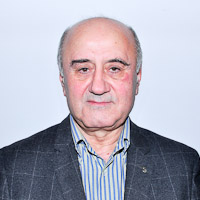
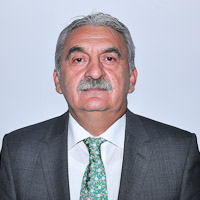
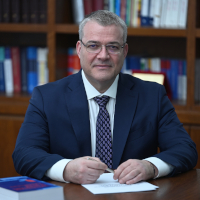
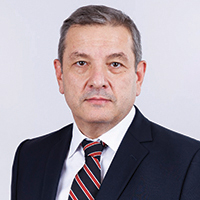
The Executive Board is the body that ensures the day-to-day activity of the Council of the Union and has 9 members: the President, the First Vice-President, the Vice-Presidents and 5 members elected by the Council of the Union from among the representatives of the Chambers of Public Notaries on the Council.
The Executive Board has permanent activity and provides the link between the Union and the 15 Chambers of Public Notaries. The Council of the Union may delegate some of its duties to it, under the conditions laid down in the statute.
Composition of the Executive Board




Duties of the Executive Board
The Executive Board of the Council of the Union has the following main duties:
- ensures the permanent activity of the Council of the Union;
- proposes to the Minister of Justice the appointment of the public notary, the change of the notarial office premises, the association and the termination of the association, the suspension and the lifting of the suspension from the office of public notary, and the revocation or cessation of the capacity of public notary;
- prepares the draft documents to be submitted for debate and approval to the Council of the Union;
- draws up the draft annual report on the activity of the Union;
- draws up the draft annual budget of the Union, ensures the day-to-day management of its assets and oversees the preparation of the financial statements and the execution of the budget;
- ensures budget execution and monitors the collection of the resources of the Union's budget;
- organises the Union's own services and approves the organisation chart and the staffing scheme for the specialist and administrative personnel of the Union;
- approves the organisation chart and the staffing scheme of, and coordinates the activity of, all entities set up within the Union;
- approves the draft annual budget, the budget execution and the discharge from management of the entities set up within the Union;
- grants, suspends and withdraws the operating licence of notarial offices, upon request or ex officio;
- examines the report of the Disciplinary Council of the Union and proposes the measures required;
- examines the summary of the professional and administrative inspection drawn up by the inspection body of the Union and proposes the measures required;
- settles the conflicts of jurisdiction between public notaries from different Chambers;
- coordinates the creation and operation of the IT system and networks between the Union and the Chambers, as well as at the level of notarial offices, in accordance with its own programmes and with those run in cooperation with European notariats;
- coordinates both the activity of the National Centre for the Administration of the National Notarial Registers (CNARNN) and the national notarial registers recording notarial acts and procedures, and adopts the normative acts required for their operation;
- settles, at the request of the President of the Union, the complaints made against public notaries or against the Chambers;
- accepts the donations and legacies made to the Union;
- ensures that the decisions of the Congress and of the Council of the Union are carried out and supervises their execution by the Chambers and by public notaries, adopting appropriate decisions;
- performs any other duties provided for by law, by the regulation, by the statute and by internal normative acts.